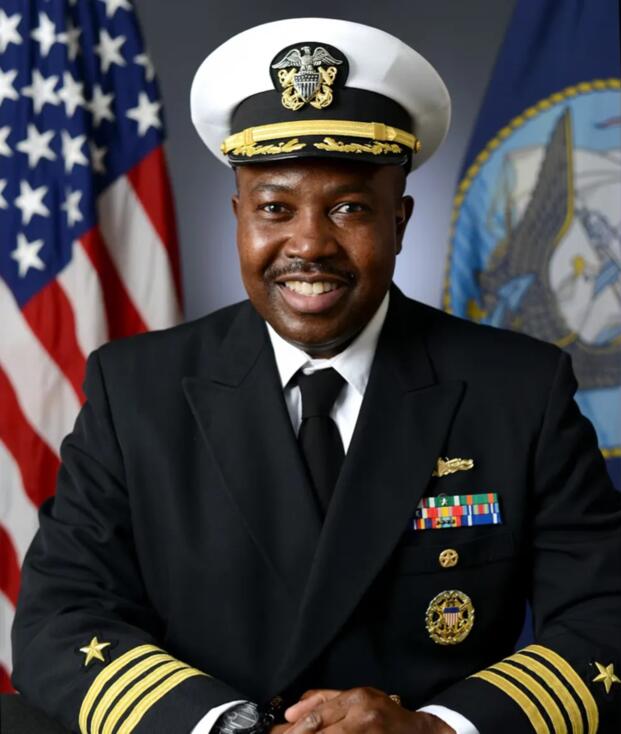
The United States Navy operates under a rigorous code of conduct and an unwavering commitment to excellence, especially within its leadership ranks. It's a system where accountability is paramount, and the stakes are invariably high. Recently, this commitment to high standards was underscored by the significant news that the Navy USS Mason commander fired, Captain Chavius G. Lewis, was relieved of his duties.
Rear Admiral Alexis T. Walker, Commander, Carrier Strike Group 10, made the decision to remove Captain Lewis from his post as commanding officer of the guided-missile destroyer USS Mason (DDG 87) on February 13. The reason cited, as is common in such military announcements, was a "loss of confidence" in Lewis's ability to command. This pivotal event unfolded while the USS Mason was deeply engaged in critical training exercises, underscoring the immediate and unyielding nature of naval leadership expectations.
The USS Mason Commander Fired: Unpacking "Loss of Confidence"
When the Navy announces a high-ranking officer's relief due to a "loss of confidence," it's a phrase loaded with significant implications, yet deliberately devoid of specific details. This ambiguity is a standard practice across the U.S. military services when addressing the removal of senior leaders. It serves multiple purposes: protecting the privacy of the individuals involved, preventing the airing of sensitive operational or personnel matters, and maintaining focus on the broader mission rather than internal specifics.
However, for those within and outside the military, the phrase "loss of confidence" can spark considerable speculation. It suggests that, at a fundamental level, the superior officer no longer trusts the judgment, competence, or leadership capabilities of the subordinate. This isn't necessarily about a single egregious error, but rather a cumulative assessment that the officer is no longer fit to hold such a critical command. On a naval destroyer like the USS Mason, the commanding officer carries immense responsibility—for the lives of hundreds of sailors, the multi-million dollar warship, and the successful execution of complex missions. The bar for command is exceptionally high, encompassing not just tactical prowess but also impeccable character, unwavering integrity, and the ability to inspire trust and cohesion throughout the crew. A "loss of confidence" indicates a failure to meet these multifaceted, exacting standards, irrespective of an officer's prior service record.
The Critical Context: USS Mason Amidst COMPTUEX and Deployment Preparations
The timing of Captain Lewis's relief adds another layer of significance to the event. At the time of the announcement, the USS Mason was actively participating in the Composite Training Unit Exercise (COMPTUEX) within the U.S. 2nd Fleet area of operations. COMPTUEX is far more than a routine drill; it's a grueling, multi-week exercise designed to test a strike group's ability to operate as a cohesive unit in complex, high-stress, and often combat-simulated scenarios. It is the final, critical hurdle a ship must clear before being certified ready for deployment.
During COMPTUEX, ships are pushed to their operational limits, requiring flawless execution of maneuvers, rapid decision-making, and robust crew coordination under simulated threats. For a commanding officer, this exercise is the ultimate test of their ship's readiness and their own leadership under pressure. To have the Navy Relieves USS Mason Captain Amid Critical Training Drills highlights the Navy's uncompromising stance on leadership performance, even amidst the most demanding operational timelines. Despite the gravity of the situation, the Navy has affirmed that the relief "does not impact the ship’s mission or schedule," demonstrating a robust system designed to ensure continuity and operational readiness under all circumstances. Captain Kevin Hoffman has swiftly assumed duties as Mason's new commanding officer, ensuring an immediate transition of leadership.
Ripple Effects: Leadership Transitions on a Naval Destroyer
While the Navy asserts no impact on the ship's schedule, a leadership change, particularly one under a "loss of confidence" designation, can inherently create Leadership Shake-Up: USS Mason Commander Firing & Crew Impact onboard. A commanding officer is the undisputed leader, responsible for setting the tone, ensuring training standards, fostering accountability, and ultimately shaping the morale and cohesion of the entire crew. Their leadership style permeates every aspect of shipboard life, from daily routines to crisis management.
The immediate effects of such a transition can include:
- Crew Morale and Speculation: The ambiguity surrounding the "loss of confidence" can lead to rumors and unease among the crew, potentially impacting morale. However, it can also reinforce a culture of accountability, showing that no one, regardless of rank, is above the Navy’s stringent standards.
- Disruption to Established Norms: A new CO brings their own leadership philosophy, priorities, and methods. While Navy personnel are trained for adaptability, a sudden change requires the crew to quickly adjust to a different style, especially during high-stress training.
- Continuity of Command: The swift appointment of Captain Kevin Hoffman as the new CO is crucial for maintaining operational continuity. Senior enlisted leaders and department heads play a vital role in bridging this gap, ensuring that the ship’s operations remain seamless during the transition period.
- Focus on Mission: Despite the internal shifts, the unwavering focus on the mission—especially during COMPTUEX—is paramount. The resilience and professionalism of Navy crews are designed precisely for such contingencies, allowing them to adapt and continue their vital work.
Captain Lewis has been temporarily reassigned to Commander, Naval Surface Group Southeast, a standard procedure during such transitions, allowing for administrative processes to unfold.
Maintaining Standards: The Unyielding Expectations of Naval Command
The decision to relieve a commanding officer is never taken lightly. It reflects a profound judgment by superior officers that an individual, despite their career achievements, is no longer capable of meeting the extraordinary demands of their position. The Navy explicitly states that it "maintains the highest standards for leaders and holds them accountable when those standards are not met."
What might lead to such a drastic measure, even without specific details, broadly relates to fundamental aspects of command:
- Leadership Effectiveness: This encompasses the ability to effectively manage personnel, foster a positive command climate, ensure proper training, and maintain high standards of discipline and readiness.
- Judgment and Decision-Making: The capacity to make sound, timely decisions under pressure, particularly during complex operational scenarios or critical drills like COMPTUEX.
- Ethical Conduct and Integrity: Any real or perceived lapse in the highest ethical standards can erode trust and confidence.
- Performance During Critical Operations: Failure to adequately prepare for or execute during high-stakes exercises can signal a deeper issue with the ability to command effectively during actual deployment.
- Accountability for Ship Readiness: The CO is ultimately responsible for the material condition, operational readiness, and safety of their ship.
This event serves as a potent reminder that naval command is an unforgiving arena, where performance and judgment are constantly scrutinized. It reinforces the principle that accountability extends to every level, ensuring the readiness and reliability of the U.S. fleet.
The Career Trajectory of Captain Chavius G. Lewis
Captain Chavius G. Lewis assumed command of the USS Mason on November 14, 2024, making his tenure relatively brief. Commissioned through Officer Candidate School in 2000, his career prior to commanding the Mason was marked by significant achievements, including command of two littoral combat ships and numerous other sea and shore assignments. These past accomplishments underscore that a "loss of confidence" decision is not necessarily a reflection of an entire career, but rather a focused assessment of an officer's ability to fulfill the specific duties of a demanding command at a particular moment.
The relief of Captain Lewis from command of the USS Mason is a stark illustration of the unyielding standards demanded by the U.S. Navy. The phrase "loss of confidence" encapsulates the immense trust and responsibility placed upon a commanding officer, and the critical nature of maintaining that trust to ensure mission success. As the USS Mason continues its rigorous COMPTUEX training with Captain Kevin Hoffman at the helm, the event reinforces the Navy's commitment to holding its leaders to the highest possible standard, ensuring that its ships and personnel are always ready to face any challenge, anywhere in the world.